Whew, 2025 is over.
For me, I am glad. If 2025 felt like a grind, you were not imagining it.
A lot of product teams ended the year stuck in the same loop: priorities changing weekly, half-finished work everywhere, and leaders asking for certainty in a market that does not hand it out.
So I wanted to make sure we don’t repeat 2025, which is something one person can handle, right? :)
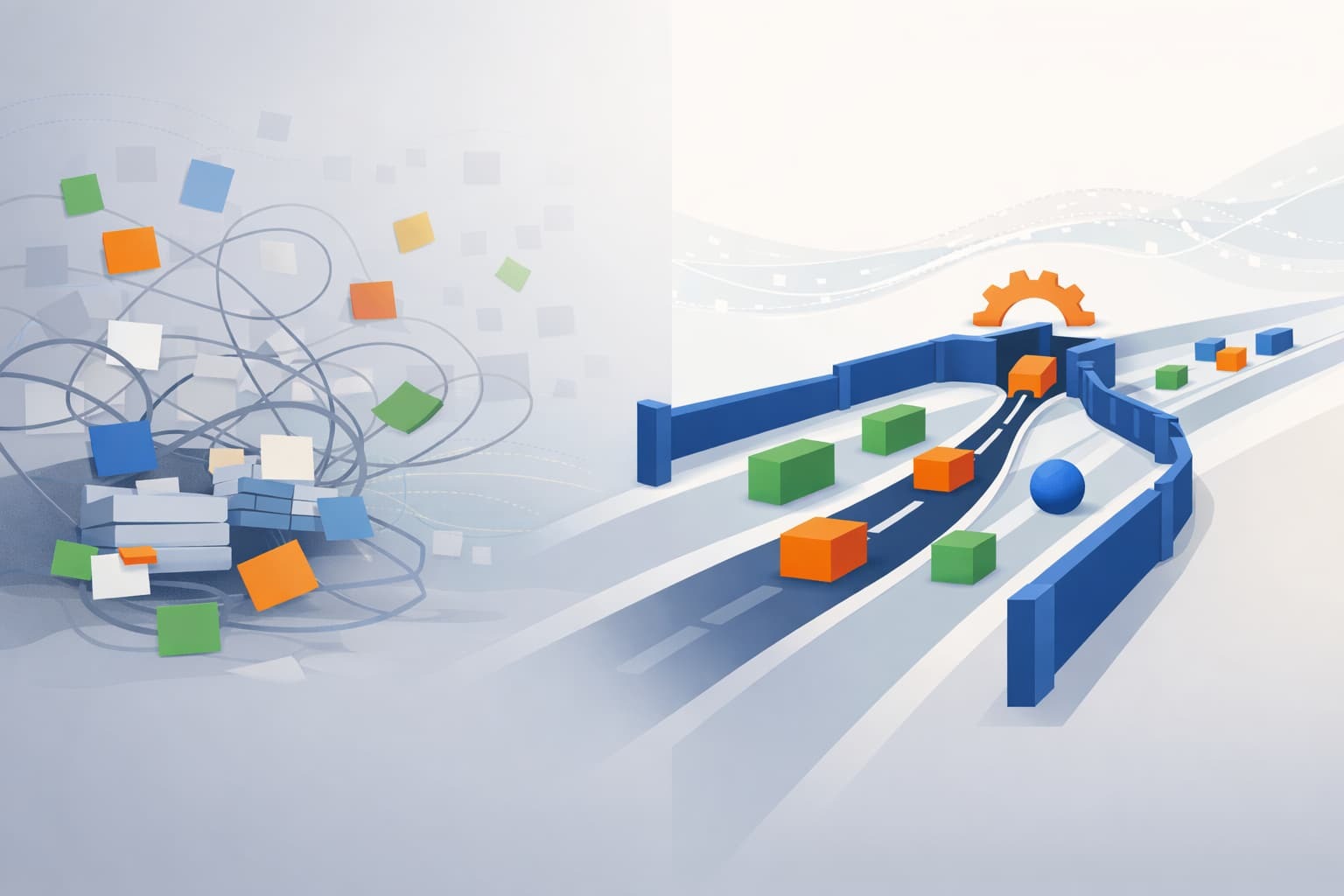
Here’s my posture for 2026 at Big Agile: less chaos, more outcomes. No hype. No theater. Just the habits that help teams ship what matters, and help leaders create the conditions for great work.
AI is part of the system now.
AI is no longer a side experiment. It’s getting baked into how work happens. That’s exciting, and it’s also where teams can hurt themselves.
The mistake we see is simple: adopting AI tools without changing the workflow and decision-making around them. If you do not define what AI is allowed to do, how outputs get reviewed, and where humans own judgment, you get speed in the wrong direction.
Start small: pick one workflow step where AI removes real friction; measure what changed; keep the guardrails clear.
Outcomes beat output in 2026.
A roadmap full of features will not earn trust this year. Evidence will.
The teams that win are the ones who can answer three questions without spinning:
- What customer behavior are we trying to change?
- What do we believe, and what do we know?
- What did we learn last week?
If that sounds basic, good. The basics are what most organizations skip when the pressure rises.
Predictability comes from flow, not promises.
A busy team is not the same as a productive team.
When work piles up, cycle time goes up. When cycle time goes up, forecasts get noisy. Then leaders push harder, and teams multitask more, and now you’re in the spiral.
If you want one practical move: reduce WIP. Start fewer things. Finish more things. Measure cycle time and aging work weekly. Fix what’s stuck, not what’s loud.
Psychological safety is a delivery requirement.
Teams do not hide problems because they enjoy drama. They hide problems because it has not felt safe to be honest.
Safety is not “being nice.” It’s being able to say, “This is risky,” or “I don’t understand,” without getting punished. When teams can speak plainly, you catch issues early. Early issues are cheap. Late issues are expensive.
Leaders can change this fast by doing one thing consistently: respond to bad news with curiosity first, not judgment.
Guardrails let teams move faster.
Autonomy without guardrails becomes chaos. Chaos creates committees. Committees create delays.
Good guardrails are clear, repeatable, and as automated as possible. The goal is fewer handoffs and safer delivery, not more approvals.
This matters even more with AI in the mix. If you do not build trust, people slow down, or worse, they work around the system.
A simple reset, you can start this month.
If you’re not sure where to begin, here’s the “small and smart” approach we recommend:
- Pick one outcome that matters
- Shrink the bet until you can learn within two weeks
- Reduce WIP; measure flow weekly
- Add one guardrail that is clear and enforced
- Run a weekly review based on evidence, not opinions
That’s enough to create momentum.
How Big Agile helps in 2026
We help product organizations do three things well:
- deliver outcomes with less friction
- make work predictable without fantasy
- build teams that tell the truth early, so problems get solved before they metastasize
If you want help choosing the right next step, reply with one sentence:
“What’s stuck right now?”
We’ll point you toward a practical move forward, even if our answer is "Don’t hire us. I know radical right? :)
We have a schedule posted for the first part of the quarter. See if any classes seem like a fit for you! We would love to have you.